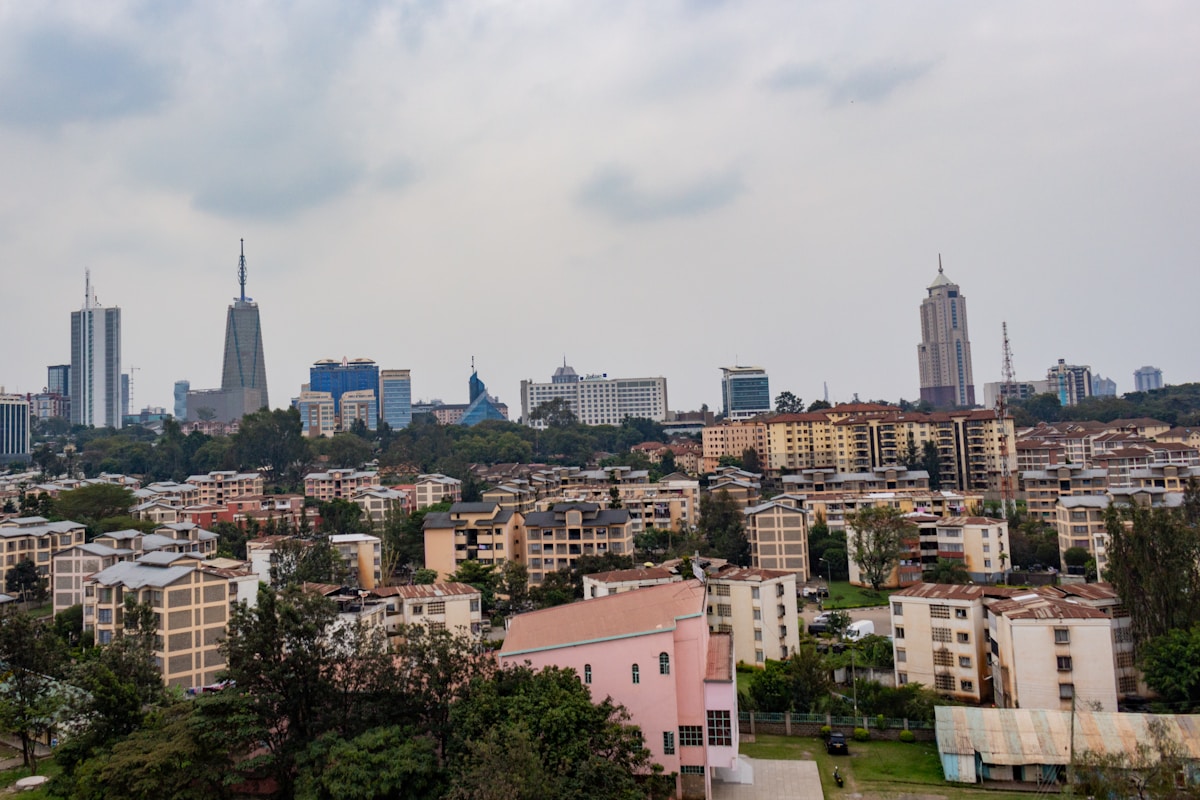
Kenya’s two largest cities pull visitors in opposite directions - Nairobi is the gateway to some of Africa’s greatest wildlife, while Mombasa unlocks a coral-fringed coastline shaped by Swahili, Arab, and Portuguese history. Choosing between them (or deciding how to combine them) makes a real difference to your trip.
We’ve spent time in both. Here’s a direct comparison across the factors that matter.
City Character
Nairobi is a fast-moving business and diplomatic capital of roughly 4.5 million people. It has a real cosmopolitan restaurant and nightlife scene, excellent museums, and an unusual urban wildlife reserve right on the city edge. The city runs on coffee, ambition, and traffic. Its character is East African metropolitan, with strong British colonial-era bones underneath.
Mombasa is older, slower, and more atmospheric. The Old Town - a dense grid of carved wooden doors, mosques, narrow alleys, and 16th-century Portuguese fortifications - belongs to a different world from Nairobi’s glass towers. The city’s population of around 1.5 million is predominantly Swahili Muslim, and you’ll feel the shift in rhythm from the moment you land.
Quick Comparison
| Factor | Nairobi | Mombasa |
|---|---|---|
| Safari access | Excellent - Masai Mara, Amboseli, Tsavo all within reach | Good - Tsavo East/West nearby; Masai Mara requires a flight or long drive |
| Beach proximity | None in the city (Diani is 2.5 hrs by road) | Beach resorts 15–30 minutes from the city centre |
| International flights | Major hub (JKIA) - most airlines fly direct | Smaller hub (Moi Int’l) - fewer direct routes |
| Climate | 1,600m altitude; mild and dry (16–24°C year-round) | Coastal; hot and humid (25–32°C); two rainy seasons |
| Dining scene | Wide - Ethiopian, Japanese, Indian, international | Strong Swahili and Indian Ocean seafood; fewer international options |
| Nightlife | Thriving - Westlands, Kilimani, Karen | Quieter; resorts have entertainment |
| History and culture | National museums, Karen Blixen Museum, Nairobi Railway Museum | Fort Jesus, Old Town, spice markets, Swahili heritage |
| Budget per night (mid-range) | KES 8,000–18,000 (approximately USD 60–140) | KES 7,000–16,000 (approximately USD 55–125) |
Safari Access
If safari is your main reason for visiting Kenya, base yourself in Nairobi first.
- Masai Mara: 5–6 hours by road or 45 minutes by chartered flight from Wilson Airport. Most lodges organise transfers. See our Masai Mara wildlife guide.
- Amboseli: 4 hours by road south of Nairobi; closer to 6 hours from Mombasa.
- Tsavo: Positioned between the two cities - Tsavo East is about 5 hours from Nairobi but only 2 hours from Mombasa, making it the one major park where Mombasa has an access advantage. See our Tsavo wildlife guide.
- Lake Nakuru: 2.5 hours north-west of Nairobi; not practically accessible from Mombasa as a day trip.
Verdict: Nairobi wins for safari access.
Beach Access
Nairobi has no beach. The nearest quality stretch of coast - Diani Beach - is a 2.5-hour road journey south of Mombasa, which means a full day of travel from Nairobi. Most people reach Diani by flying to Mombasa and driving down.
From Mombasa you can reach:
- Diani Beach: 45 minutes south by road (the bridge and south coast highway are now well surfaced)
- Nyali and Bamburi beaches: 20–30 minutes north of the city centre
- Watamu: 2 hours north - excellent for snorkelling and sea turtles
Verdict: Mombasa wins for beach access.
Culture and History
Nairobi has strong cultural infrastructure: the Nairobi National Museum holds extensive collections on natural history and Kenyan peoples, the Karen Blixen Museum occupies her original farmhouse in the Karen suburb, and the Nairobi Railway Museum covers the dramatic story of the Uganda Railway. Nairobi also has a well-developed gallery and live music scene.
Mombasa’s Old Town is one of the best-preserved Swahili settlements in East Africa. Fort Jesus - a UNESCO World Heritage Site - anchors the southern headland and gives a vivid account of Portuguese, Omani, and British control of the coast over four centuries. Entry costs approximately KES 1,200 (around USD 9) as of 2026 - check the National Museums of Kenya for current pricing. The Old Town itself is free to explore.
Verdict: a tie - different types of culture.
Food and Nightlife
Nairobi has Kenya’s most developed restaurant scene. In Westlands and the CBD you’ll find everything from Addis Ababa–style injera restaurants to Japanese omakase counters. Mid-range dinner costs approximately KES 1,500–3,000 per person (USD 11–23). Carnivore Restaurant in Langata remains a famous (if touristic) institution - a meat feast running approximately KES 6,500 per person as of 2026.
In Mombasa, the food tilts towards Swahili: coconut rice, pilau, biriyani, samosas, and superb grilled seafood - a plate of fresh prawns or snapper on the Mama Ngina waterfront costs approximately KES 800–1,500 (USD 6–12). The Tamarind Restaurant by the Old Town Harbour is the go-to for a smarter seafood dinner (approximately KES 3,000–5,000 per person as of 2026).
Verdict: Nairobi wins on variety; Mombasa wins on character.
Where to Stay
Nairobi
- Emara Ole Sereni (near JKIA): midrange-to-upper, from approximately KES 25,000/night (USD 195) as of 2026. Popular with overnight transit guests.
- Sankara Nairobi (Westlands): boutique upscale, from approximately KES 30,000/night (USD 230).
- Nairobi Serena Hotel (Central Park): heritage property, from approximately KES 22,000/night (USD 170).
- Ibis Styles Nairobi Westlands: reliable budget-to-midrange option, from approximately KES 8,500/night (USD 65).
Search hotels in Nairobi on Booking.com
Mombasa
- PrideInn Azure Hotel (Mombasa island): midrange, from approximately KES 9,000/night (USD 70).
- Serena Beach Resort & Spa (Shanzu, north coast): upper-midrange, from approximately KES 20,000/night (USD 155). All-inclusive rates available.
- Tamarind Dhow Beach Villas (Nyali): boutique, from approximately KES 17,000/night (USD 130).
- Fort Jesus Backpackers & Guesthouse (Old Town): budget, from approximately KES 3,500/night (USD 27).
Who Should Choose Which?
Choose Nairobi if: (browse Nairobi tours and day trips)
- Safari is your priority
- You’re only spending 1–2 days in a city
- You want a wider dining and nightlife choice
- You’re flying in and out of JKIA
- You want to combine a city stay with the Masai Mara or Amboseli
Choose Mombasa if: (browse Mombasa tours and day trips)
- Beach and relaxation are the point
- You’re interested in Swahili history and the Old Town
- You want proximity to Diani, Watamu, or Lamu
- You prefer a slower pace
Choose both if:
- You have 10 days or more
- You want the full Kenya experience - wildlife plus coast
- You don’t mind one domestic flight or the SGR train
Getting Between Them
The Madaraka Express SGR train runs daily between Nairobi Terminus (off Mombasa Road) and Mombasa Terminus (Miritini, west of the city). Journey time: approximately 4.5 hours. Economy fare: approximately KES 3,000 (USD 23) as of 2026. Book through the Kenya Railways website or at the station - demand exceeds seats, so book ahead.
Flights from Wilson Airport or JKIA take about 55 minutes. Jambojet and Kenya Airways both operate this route; fares start from approximately KES 5,000 one-way (USD 38) when booked in advance.
Bus options (Mash East Africa, Modern Coast) take 8–10 hours overnight and cost approximately KES 1,200–1,800 (USD 9–14) one-way.
For city-level planning, see our Nairobi city guide and Mombasa city guide. Our Nairobi to Mombasa road trip guide covers combining both cities in a single itinerary. Where to stay guides: Nairobi hotels and Mombasa hotels.
Plan Your Trip
✈️ Book your flights to Kenya 🛡️ Get travel insurance 📱 Stay connected with an eSIM 🚗 Rent a car