Kenya works well for families, but only if you plan it around children rather than around a standard adult itinerary. Short drives, small groups, a camp that welcomes children and a beach stay at the end make the difference between a tired, grumpy week and a trip your kids talk about for years. This guide covers what we would plan for a first family trip: lodge age rules, malaria, how long to spend on safari, the child-friendly stops in Nairobi and Mombasa, and whether to book a private vehicle.
Choosing the Right Age and Season
There is no legal minimum age for visiting Kenya, but safari life has practical limits. Game drives run two to three hours in an open or pop-top vehicle, usually starting around 6am and again mid-afternoon. A child who cannot sit still for 90 minutes will find drives hard, however good the lions are.
- Under 5: Stick to Nairobi, the coast and family-friendly stays. Many camps will not take very young children at all.
- 6 to 9: The ideal first-safari age. Children are old enough to spot animals and follow rules, and young enough to be amazed by a giraffe at the car window.
- 10 to 15: Ready for longer drives, a night in a conservancy and, from about 12, guided walks.
For timing, the dry months of July to October and January to February give the easiest game viewing and the least mud, though the Mara is busiest in August and September. School-holiday weeks push prices up, so book camps early. Our best time to visit Kenya guide has the month-by-month detail.
Lodge and Camp Minimum-Age Policies
This is the single biggest planning trap. Policies vary camp by camp, and rates and rules change, so treat the figures below as a starting point and confirm directly with the camp before paying a deposit.
Based on operator and agent listings we checked in 2026:
- Naboisho Camp (Mara Naboisho Conservancy): welcomes children from about 5, with two interconnecting family suites. Guided walks are limited to children aged 12 and over, and younger children are expected to share a tent with an adult.
- Basecamp Wilderness Camp (Naboisho): listed with no minimum age, but walking safaris require 12 and over.
- Basecamp Eagle View (Naboisho): listed as welcoming children from 7.
Private conservancies such as Naboisho can also allow off-road driving and night drives, which suits families because the lions come close and drives can be shorter and more flexible. The larger national reserve lodges tend to be more relaxed, with swimming pools, early dinners and family rooms, but often do not offer private vehicles inside the lodge price.
What to ask every camp before booking:
- What is the minimum age, and is it different for walks, night drives and game drives?
- Do you have family tents or interconnecting rooms, and is the child rate sharing with parents?
- Are children escorted between tent and dining area after dark? (They should be.)
- Can we book a vehicle just for our family, and what does it cost?
- Is there a pool with a fence or lifeguard, and are there child-sized portions at meals?
If you are comparing places to stay in the Mara, see our Masai Mara where to stay page, and check the Masai Mara safari cost breakdown because park and conservancy fees for children are lower than adult rates but still add up for a family of four.
Malaria, Altitude and Health with Children
Malaria is the main health concern with children. In broad terms:
- Nairobi and the central highlands: low risk because of altitude, though check with your clinic for the exact areas you will visit.
- Laikipia (Ol Pejeta, Lewa) and the Aberdares: higher than Nairobi but generally lower than the lowlands, with risk varying by altitude and season. Ask your doctor about your specific stay. Read our Laikipia and Lewa guide to see why Laikipia is popular with families.
- Masai Mara, Tsavo, Amboseli, the coast and Lake Victoria: prophylaxis normally recommended.
Doses depend on a child’s weight, and not every drug suits very young children, so see a travel clinic 6 to 8 weeks before you leave. Pack insect repellent suitable for children, long-sleeved clothing for evening, and a bed net if the camp does not provide one. Yellow fever rules and the full vaccine list are in our Kenya health and vaccination guide. Also buy travel insurance that includes medical evacuation before you fly; a flight from the Mara to Nairobi is expensive without cover. You can compare travel insurance for Kenya before booking.
Nairobi sits at about 1,795 m, so adults and children alike may tire easily on the first day. Drink water, use sunscreen at all times (the equatorial sun is strong even on cool days) and build in an easy first afternoon.
How Long Should a First Family Safari Be?
Three days and two nights is the length we would plan for a first family safari. It gives four to five game drives, enough time for the “big” sightings without the monotony of ten consecutive early mornings. Fly in rather than drive if the budget allows: the road to the Mara takes around five to six hours each way, which is hard on young children. Our Nairobi to Masai Mara guide covers the options.
A simple shape for a family trip of 8 to 10 days:
- Days 1 to 2: Nairobi, gentle arrival, animal stops (below).
- Days 3 to 5: Three-day safari in the Mara or Amboseli (Amboseli’s open plains and elephants are easy for children to see).
- Days 6 to 9: Beach stay on the coast.
With older children, add a night at a Laikipia conservancy such as Ol Pejeta, where Ol Pejeta Conservancy offers the last northern white rhinos and a chimpanzee sanctuary. Our big five Kenya page helps you set expectations for what children can realistically see.
Child-Friendly Stops in Nairobi
Nairobi is the easiest place to give children a wildlife encounter without a long drive.
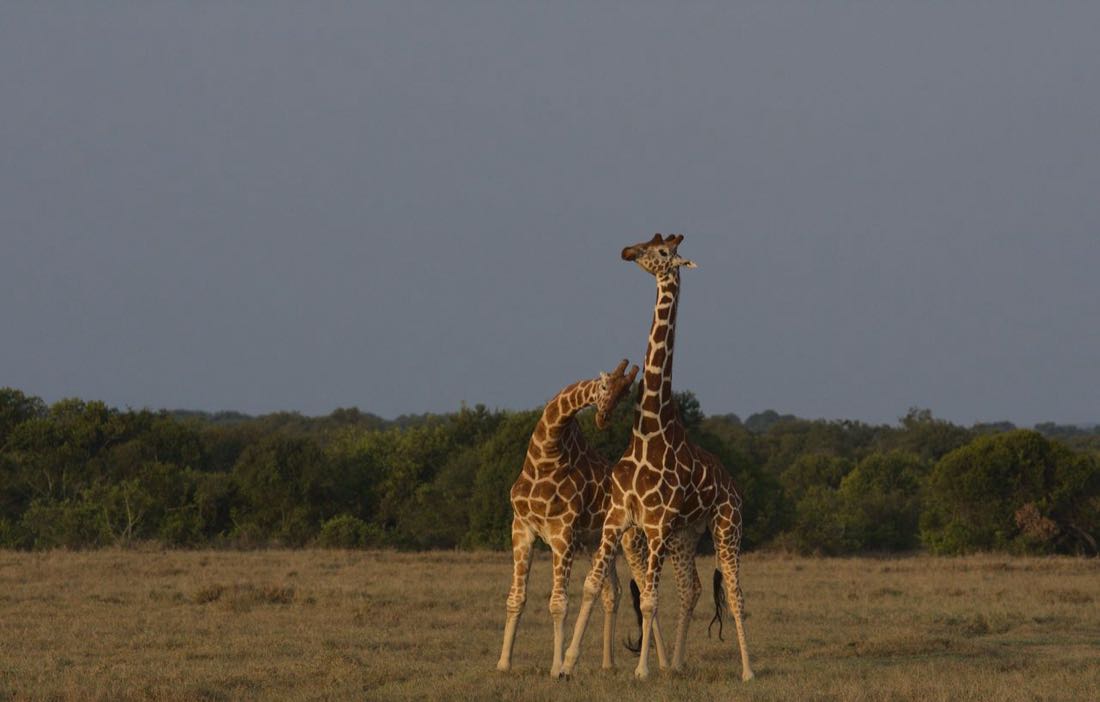
- Giraffe Centre: Children feed Rothschild giraffes from a raised platform at head height. Entry is approximately USD 15 per non-resident adult as of 2026, open daily 9am to 5pm. Allow 45 to 60 minutes. Child rates are lower; confirm at the gate.
- David Sheldrick Wildlife Trust: The orphaned-elephant visit is 11am to noon, booked in advance. Entry is approximately USD 10 per person. Children enjoy the mud bath and milk-bottle feeding. Read the age notes on the booking page before arriving with babies.
- Nairobi National Park: Lions, giraffes and rhinos with the skyline behind them. A half-day game drive is a good rehearsal for the real safari, and it is only 7 km from the city centre.
A Nairobi family tour can bundle two of these stops with a driver, which saves arguments about traffic.
The Coast: Haller Park and the Butterfly House
Mombasa has two simple, child-sized wildlife stops that complement the safari:
- Haller Park (Bamburi Nature Trail): a reclaimed quarry turned nature park with giraffes, hippos, crocodiles and giant tortoises that children can feed. Fee sources disagree and we could not confirm a 2026 official price, so check at the gate. Children’s tickets for non-residents are commonly quoted at around KES 600.
- Mombasa Butterfly House: a small walk-through butterfly garden by Fort Jesus. The operator’s rate table lists a non-resident child fee of about KES 250, but the page may be out of date, so confirm before you go.
For other ideas see our Mombasa guide and Mombasa day trips. For a swimming and sandcastle base, the south coast around Diani is quieter and calmer; see our Diani Beach where to stay page and Diani Beach tours.
The Beach-and-Bush Combination
Ending a trip on the coast is the single best way to reset a family after early-morning drives. Fly Nairobi to Mombasa or Ukunda (or take the standard-gauge railway; see our Nairobi to Mombasa train guide), then settle for four nights in one resort so children are not repacking. Pick a resort with a children’s club and a calm beach; Diani and Watamu both suit this. Our Kenya beach and safari itinerary lays out the sequence day by day, and the Kenya coast guide explains the tides, which matter if you have young swimmers. Note that coastal Kenya has malaria risk, so continue prophylaxis there.
Private Vehicle or Group Safari for Families?
We recommend a private vehicle for most families, even though it costs more per day. The reasons are practical rather than luxurious: you can leave when a child is tired, stop for a toilet break, spend 40 minutes watching a lion cub, or skip a drive entirely, and nobody else in the vehicle minds. A group vehicle works on a fixed timetable and shared seats, and a restless five-year-old is hard on strangers. On a group departure, children are also less likely to get a window seat.
The break-even point depends on your group size. A family of four often finds a private vehicle comparable to four group seats, especially in peak season. Our group vs private safari guide breaks down the cost crossover and shows when the price gap closes. If the budget will not stretch, a compromise is a private vehicle for the Mara days and group tours for the city.
Other practical tips:
- Ask for a pop-top (roof-lifting) minibus or 4x4 with a window seat for each child. Ask whether child seats are available; they often are not, so bring your own for young passengers.
- Pack binoculars for each child, snacks, a hat and a small notebook for a “sightings list.”
- Keep drives to three hours and avoid midday, when animals rest and children melt down.
- Teach the rules once: stay seated, stay quiet, no feeding animals, never leave the vehicle.
For official safety and entry information, check the Kenya Wildlife Service for park fees and the Kenya Tourism Board for general planning.
Costs in Brief
Many parks charge lower child fees (children are often defined as ages 5 to 17, with under-5s free in some reserves), but fees change, and Mara rates differ between conservancies and the national reserve. KWS raised several fees in 2026, so check kws.go.ke for the latest and pre-book on eCitizen. For a full budget breakdown see our Kenya safari cost guide, and our first time in Kenya page for arrival logistics and visa basics. If you are still deciding on a safari style, our Kenya safari guide compares the main parks.